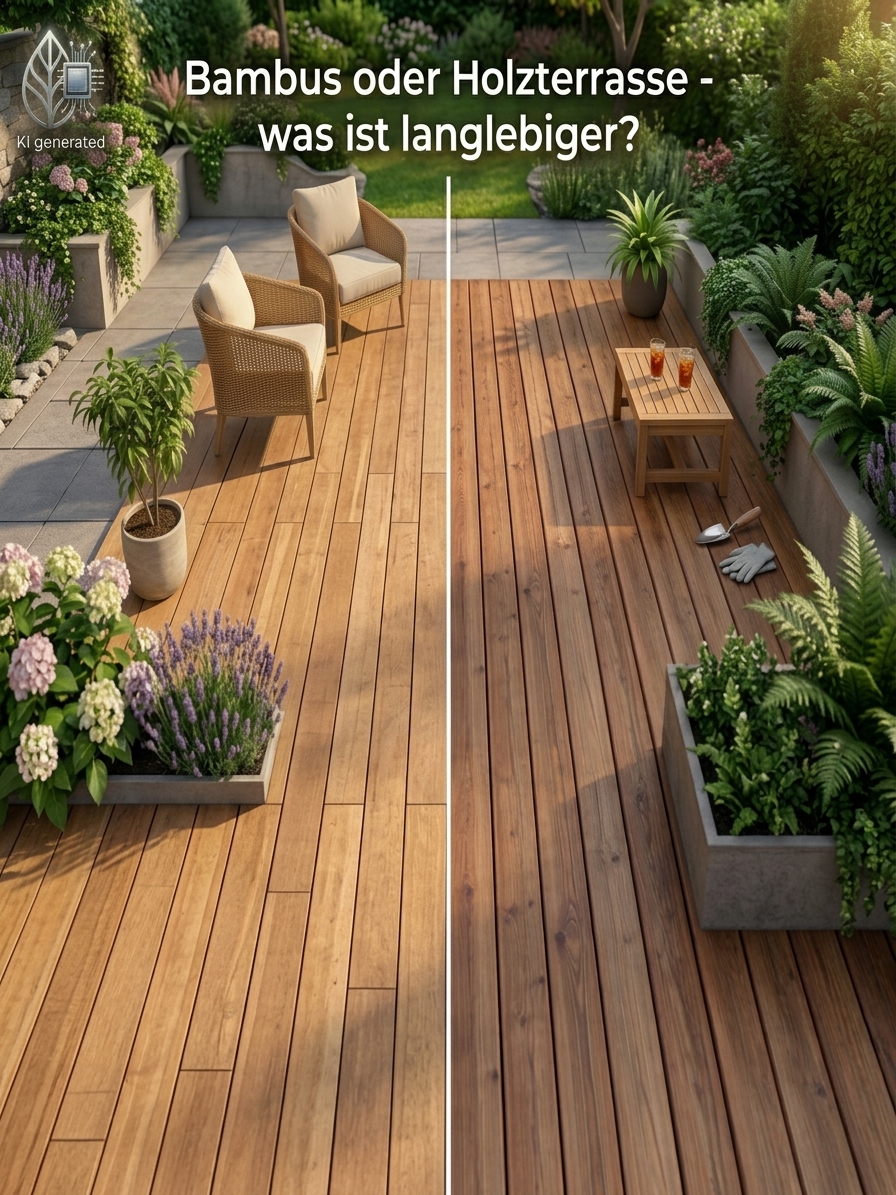
Bamboo or wood decking – which is more durable?
If you are currently planning or renovating a deck, you will sooner or later face the same question: Bamboo or wood decking – what lasts longer, what requires less work, and what is truly the smarter investment? The range of materials available in 2026 is vast, and the promises made by suppliers are often even larger. This article explains the crucial differences with technical precision and without the marketing fluff – so you can make a decision you will still be happy with in ten years.
Why the choice of material matters more than just looks
A deck is not a seasonal item. If you are building today, you are planning for the next 20 to 30 years. And anyone who has ever had to tear down a wood deck after ten years because the wood had warped, cracked, or rotted knows the pain of that miscalculation from personal experience.
The core problem with classic wood decking lies in the biology of the material. Domestic woods like larch or Douglas fir are generally suitable, but they are exposed to the elements. Rain, UV radiation, frost, and temperature fluctuations take a continuous toll on the wood. Without regular maintenance, the surface turns gray, cracks form, and the durability class drops faster than expected. Tropical woods like bangkirai or ipe last longer, but raise valid questions regarding their origin and forest conservation. Bamboo, on the other hand, is botanically not a wood, but a grass. What might initially sound like a disadvantage is actually its greatest strength: bamboo grows up to a meter per day, is ready for harvest in four to five years, and leaves no clear-cutting behind because the root remains in the ground and sprouts again.
The central issue: Not all bamboo is the same
This is the crux of the matter that many overlook when comparing materials. "Bamboo" is not a homogeneous category. Inexpensive bamboo from low-lying areas has a lower density and is more sensitive to changes in moisture. Highland bamboo from altitudes of 500 to 1,000 meters, however, grows more slowly, develops a significantly higher cell density, and thus possesses a natural strength that can compete with many types of tropical wood.
The processing method is also decisive. Since 2018, AMBOOO has relied on the HCS (High Compression Strand) process, which has been patented for years. In this process, sugar is extracted from the bamboo through a precisely controlled combination of temperature, duration, and pressure. Sugar in the material is the primary cause of mold, insect infestation, and premature material degradation. Without it, and with the addition of resins, bamboo achieves durability class 1—the same rating as teak or bangkirai, but without the ecological baggage.
Dimensional stability is another factor often underestimated in comparisons. High-quality processed bamboo shows significantly less swelling and shrinking under changing weather conditions than solid wood. This means: fewer cracks, more uniform gaps, and a more stable overall appearance over the years.
Practical decision-making aid: What really makes the difference
To ensure you don't leave the "bamboo vs. wood decking" comparison in the abstract, here are the essential points in a direct side-by-side:
- Durability: AMBOOO bamboo boards with durability class 1 achieve a lifespan of over 25 years. Domestic wood species like larch or tropical woods fall below this, depending on maintenance. Bamboo or wood decking: with comparable maintenance, bamboo is at least equal, and often superior.
- Maintenance effort: Wood decks generally require annual oiling or staining to slow down graying and cracking. For its bamboo boards, AMBOOO recommends treatment with its specially developed bamboo care oil every one to two years. The effort is comparable, but the effect is longer-lasting due to the already dense surface.
- Graying: Both materials will turn gray without UV protection. The difference: With bamboo, the natural color can be reliably maintained through regular oiling. The surface remains more uniform than with many wood species, which are prone to splintering.
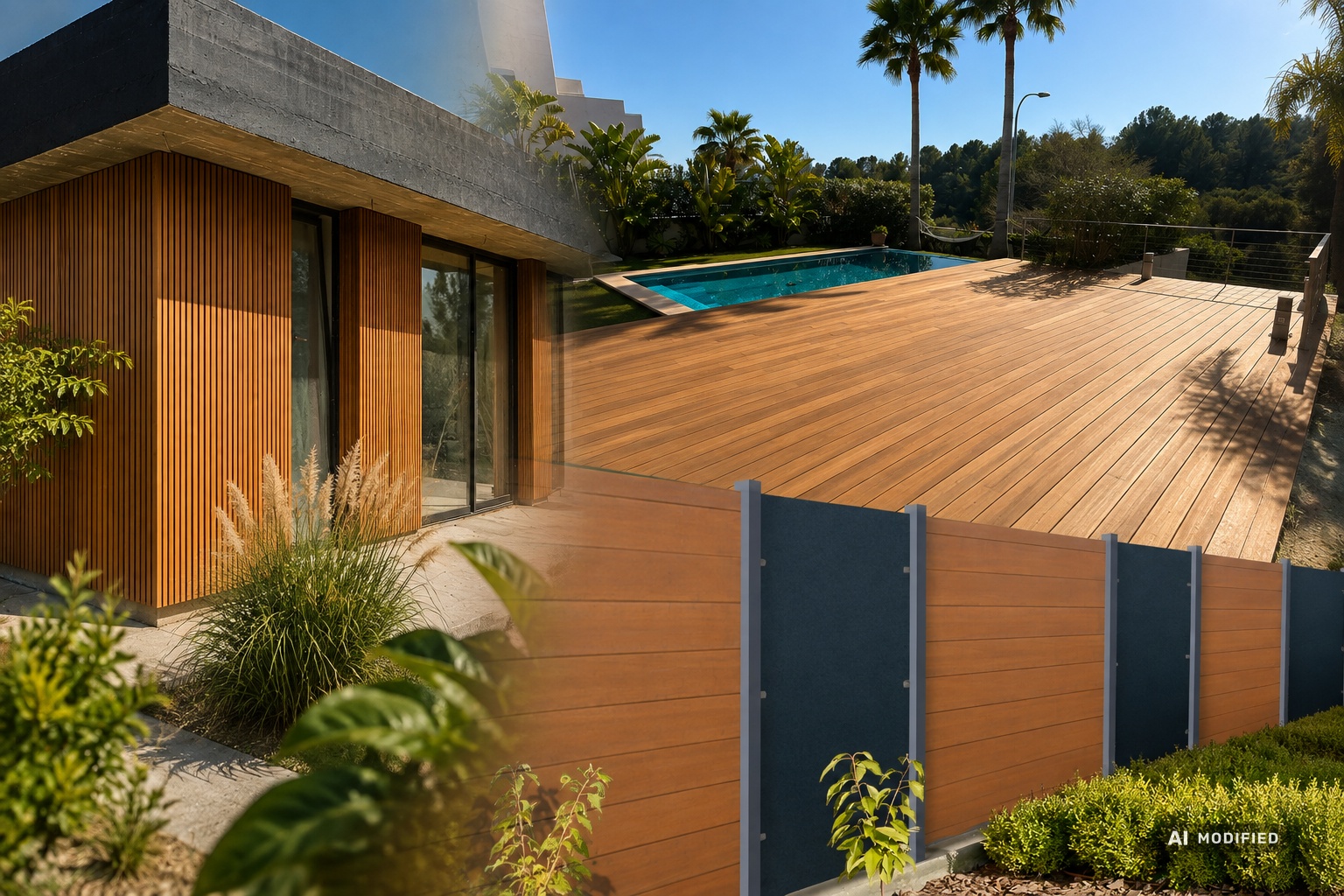
- Look and feel: AMBOOO bamboo decking is often described as "parquet for the outdoors." The surface is dense, warm, and uniform. The widest range of colors on the market allows for individual design without compromising on technical quality.
Conclusion: A decision for the long term
Building a terrace is an investment in quality of life. The question of "bamboo versus wood decking" cannot be answered with a blanket "bamboo always wins." However, with high-quality processed highland bamboo and the HCS process, you get a material that is technically on par with the best tropical woods, is produced with FSC certification, and requires fewer compromises in design.
If you want to do more than just read about the differences, come and feel them for yourself: Request an AMBOOO sample box and see the texture, density, and surface quality for yourself. Or take advantage of our personal consultation to ensure your project is built on the right material from the very start.